
INTRODUCTION
What Are Geosynthetics?
The term geosynthetics is an all encompassing term that would theoretically cover any man made material used within a soil structure with the goal of improving specific physical properties of the soil. Whilst that could include soil nails, concrete and steel piles, ground anchors, drainage pipes etc these generally function in isolation from the soil rather than changing the physical properties.
The term is generally used to describe planar materials in roll, strip or mesh form usually manufactured from polymers such as Polypropylene, High Density Polyethylene, Polyester etc or from glass or carbon fibre, natural fibres such as jute or coir and steel. Blocks or sheets of EPS or XPS can also be used to provide lightweight structures over poor ground or create compressible zones to compensate for ground heave. These materials typically serve a specific range of functions when incorporated into a soil body.
These functions break down into the 12 categories below and our focus is exclusively on the interfaces where soil mechanics meet geosynthetics to ensure the most appropriate materials are correctly used so that the overall geosystem meets its full service requirements and more.
Separation
Filtration
Drainage
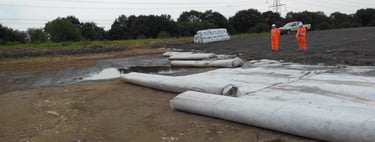
Planar materials used to separate dissimilar soils to prevent intermingling. Usually non-woven textiles but can also be closely woven textiles or membranes. Relatively low in weight and strength.
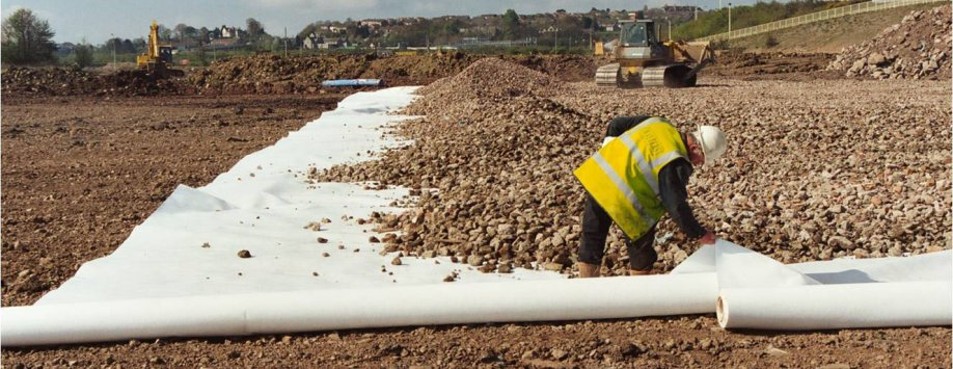
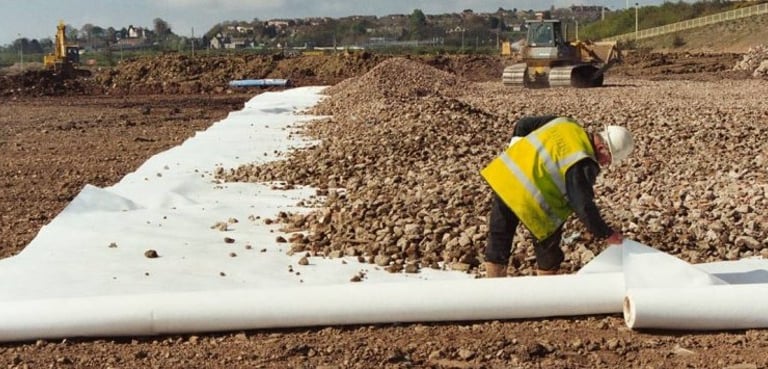
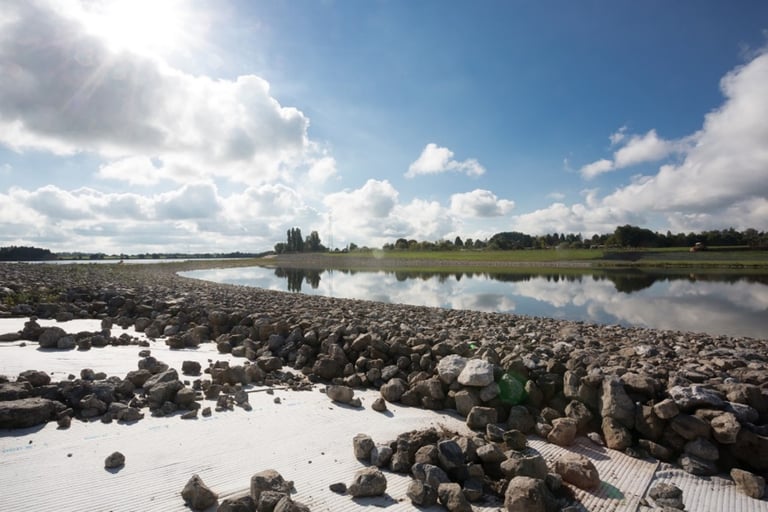
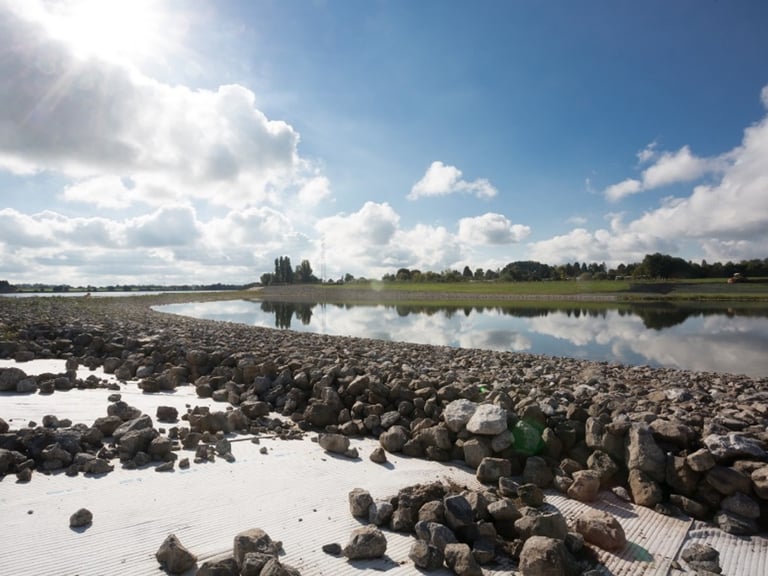
Planar materials similar to separation textiles but designed to permit the passage of fluids or vapour through the textile whilst preventing intermingling. Mostly non-woven textiles with a pore size designed to suit the adjacent soils. Can vary from light weight separation and filtration to prevent fines migration into engineered soil to very heavy weight non-wovens for use beneath heavy rock armour to prevent loss of fines under hydraulic actions.
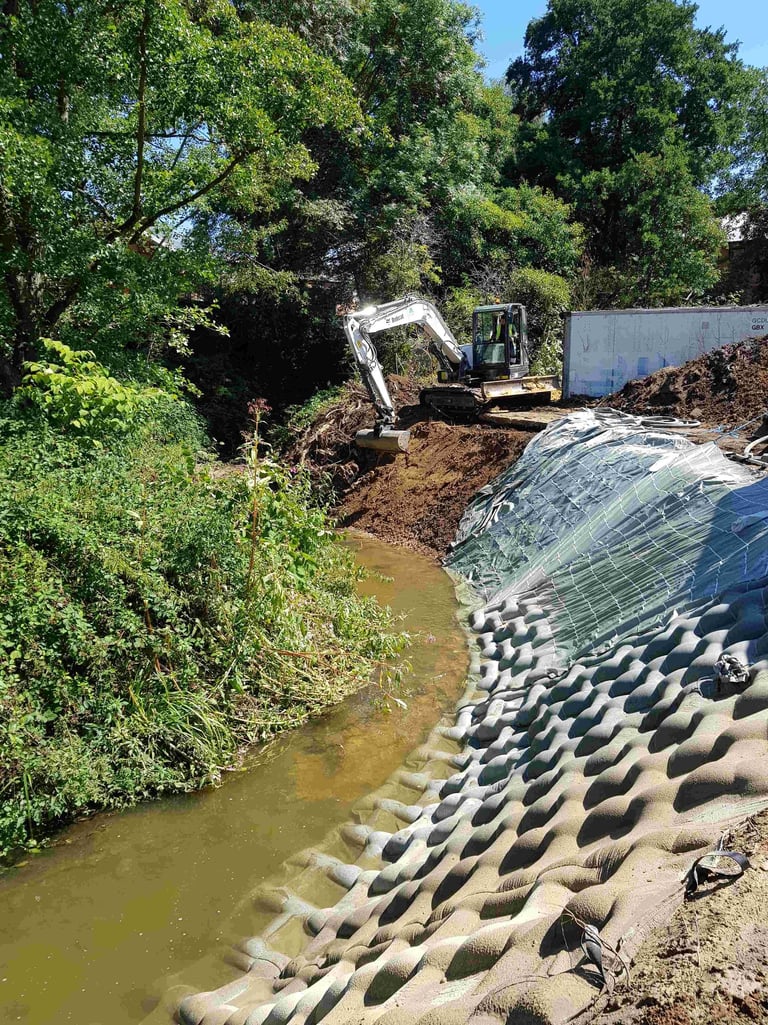
Planar geocomposites which carry fluids or vapour within the plane of the geosynthetic. The geocomposite consists of a spacer; typically a rigid cuspated membrane, 3D monofilament mats, small diameter pipes, wicks or geonet spacers which maintain an open drainage path as the core sandwiched between layers of either a non-woven filter fabric or a membrane .
Reinforcement
Stabilisation
Barrier
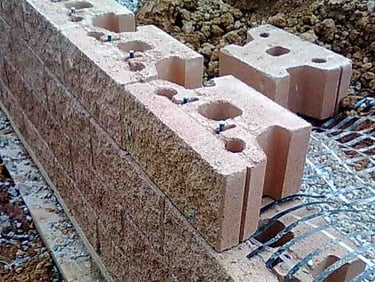
Elements laid within soil which maintain tensile resistance to lateral deformation generated by normal forces applied to the soil. Typically geogrids, woven geotextiles, polymeric strips/straps, steel strips or meshes with a wide range of strengths to suit the design forces applied to the soil .
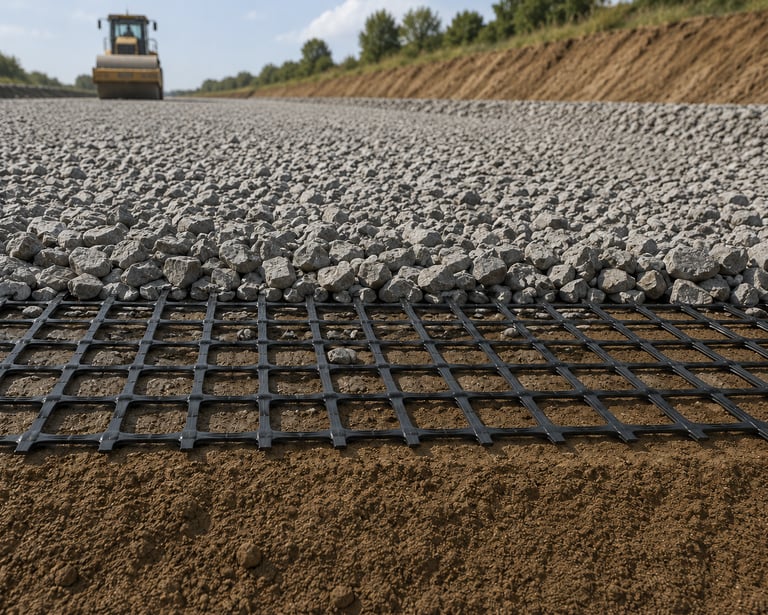
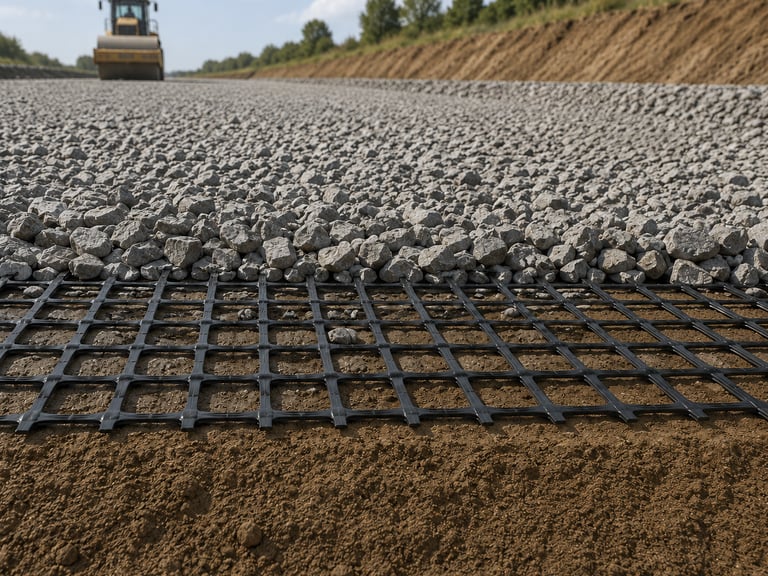
Planar geogrids or geocells laid within unbound granular materials to resist lateral deformation of a granular platform under applied loading at low strain levels. Typically geogrids or geocells with relatively low strength in 2 or more directions .
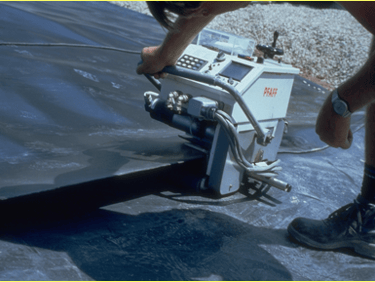
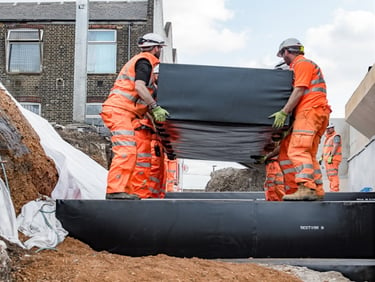
Planar material laid between soil layers to prevent or greatly limit the passage of fluids or vapour through the material plane. Usually heavy duty membranes of HDPE or butyl rubber textiles with fully sealed joints or GCLs (Geosynthetic Clay Liners) consisting of two textile layers containing a specific weight of fine bentonite clay powder which when hydrated under a compressive force creates a relatively impermeable layer.
Protection
Asphalt Interlayers
Lightweight & Compressible Fill
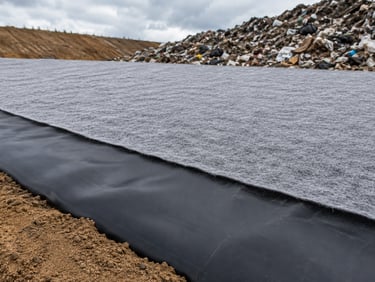
Planar material laid over membranes or other geosynthetics to provide cushioning and resist puncture or damage to critical functions of the principal geosynthetic. Usually very heavyweight non-woven geotextiles.
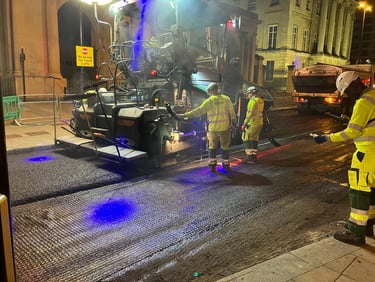
Planar material placed within traditional asphalt pavement surfaces to resist reflective cracking and potentially provide a barrier to the passage of moisture or a stress absorbing layer where the asphalt sits on a more rigid surface. Typically a non woven layer either very thin which serves only to adhere the textile to a bituminous tack coat or a much heavier duty non-woven SAMI layer which absorbs a larger volume of bitumen to provide the barrier and stress relief functions which can be combined with a geogrid of polymer of glass fibre or a steel mesh which provides the reinforcement to address reflective cracking.
Fill replacement used to prevent settlement over extremely poor foundation soils, facilitate rapid embankment construction or resist heave due to expansive soils. Typically large ultra lightweight expanded polystyrene blocks, extruded polystyrene boards or compressible or collapsible cell structures.
Erosion Control
Geo-Containers
GCCMs & Concrete Mattresses
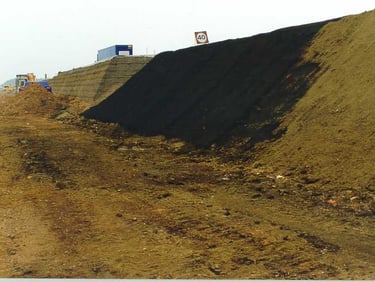
Planar materials laid on sloping soil surfaces to intercept the natural forces (rain, wind, water flow) which left unchecked would otherwise lead to the progressive loss of soil and ultimately slope failure. These can consist of biodegradable natural fibre textiles which stabilise the surface for a short period until vegetation is fully established or permanent polymeric reinforcement mats and geocells which reinforce or stabilise the topsoil layer in the long term even after vegetation has established.
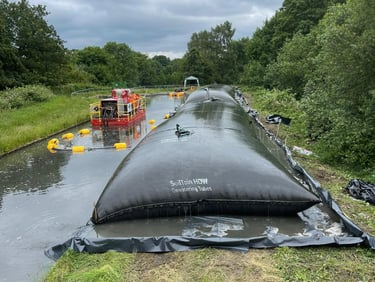
Large bags, tubes or containers fabricated from geosynthetics. Typically high strength tape woven fabrics or reinforced non woven fabrics for containment or dewatering of fine fill materials or high strength geogrid net bags used to contain large cobbles and rock fill for scour protection.
Geosynthetic concrete Mats are composite fabrics with dry cement grout in the core of the fabric which once hydrated creates a thin concrete armour. Concrete mattresses are fabricated using woven geotextiles to create various thicknesses and forms of sacrificial formwork which are pumped full of concrete grout to create in-situ scour protection on revetments and around rigid structures even beneath the water line.
ABOUT
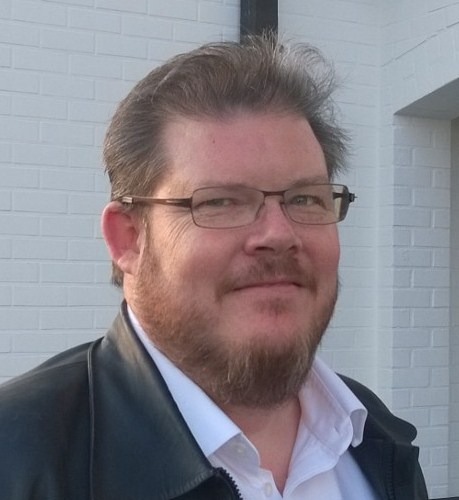
Dave Woods
In 2001 I moved to Hong Kong to join VSL Asia and gained significant experience of much larger scale geotechnical projects as design manager and project manager before switching to the Singapore and Indian offices in 2007 contributing to reinforced soil structures in most countries in the Asia Pacific region, Australia and the Middle East as well as working in the foundations team in Singapore tendering for foundation packages on the Downtown Line. In 2010 I switched to Bachy Soletanche Singapore working on the preparation of main contract bids for major infrastructure projects on underground rail, deep foundations, port works and stadia with contract values up to £500 Million in Singapore, Malaysia, Indonesia and Australia.
Since returning to the UK in 2014 I have worked for 3 major geosynthetics manufacturers advising them on the detailed technical implementation of their materials in a wide range of geotechnical projects adding to my technical knowledge of the materials in general and increasing the scope of my geosynthetic knowledge beyond reinforcement and erosion control to include drainage, GCLs, scour protection, geo-containers, GCLs, asphalt interlayers, lightweight EPS fill and more innovative materials incorporating fibre optic sensors or adsorption mediums for the treatment of contaminated sites.
Looking back on over 30 years I am surprised that geosynthetics are still often referred to as innovative or treated like an unproven technique when they should have become far more prevalent due to their long proven benefits in sustainability, cost reduction, speed of construction and health and safety.
I believe the reticence the industry still holds for geosynthetics is down to unfamiliarity from the majority of engineers since the topic is barely mentioned in most Engineering courses as well as a confusion at the wide range of material form and type currently available and a mistrust of the expertise on offer from manufacturers as that expertise is often viewed as a sales pitch. As such the main goal in my forming DW Geotech is to offer the benefit of a full career of geosynthetic and geotechnical experience delivered from an independent perspective to ensure sites can safely bridge the knowledge gaps in the procurement chain for geosynthetics and overcome the site issues that are exacerbated by self-certification.
I am a Civil Engineer specialised in geotechnical engineering and particularly within the field of geosynthetics having chaired industry committees, written and presented peer reviewed papers across the entire topic at conferences globally, guest lectured at Universities in the UK and India as part of Undergraduate and Masters degree courses and co-authored 2 chapters on the specialist field of reinforced soil in the Institute of Civil Engineers Manual of Geotechnical Engineering.
After a false start studying architecture in Portsmouth I realised I was an Engineer at heart and graduated with a Bachelors degree in Civil Engineering from Coventry University and a French DUT in the same discipline from the University of Grenoble. Since 1994 I have worked in the field of geotechnical engineering initially offering detailed design through to construction supervision of a range of reinforced soil structures and gravity retaining walls with Comtec UK Ltd which later became part of Keller Ground Engineering.
DW Geotech
QA/QC for geosynthetic systems and retaining structures from desk study to site installation.
SYSTEMS
Overview
About
Services
Enquiry
CONTACT DETAILS
info@dwgeotech.com
Project Enquiries: +44 7575 301375
Tunbridge Wells UK
(C) 2026 DW Geotech-Ensuring geosynthetic performance in field conditions.
INDEPENDENT GEOSYNTHETIC ADVICE